Yaqoub Ghabash, the referee of records
At 57 the UAE's most senior official reflects on a career of firsts, why Emirati referees drift away from the game, and the retirement he thought about but did not take.
The record of our international referee Yaqoub Ghabash is full of firsts across his officiating career in basketball — not least that he is still on court at 57, making him the oldest referee in the UAE, the Gulf region and almost the Arab world, and perhaps in Asia. He is also the most senior of our referees to have handled domestic matches, and the only Emirati official who has been there since the Dubai International's very first edition.
Captain Yaqoub Ghabash paid tribute to Major General Ismail Al Qarqawi, president of the UAE and Arab federations, for his significant role and deep love for the game, saying he personally hoped he would continue at the head of the federation in the next term.
The Basketball Association's website hosted our international referee to answer a number of important questions about the game.
Interview: Safaa Amer
When did you start in the game, at which club, and when did you retire?
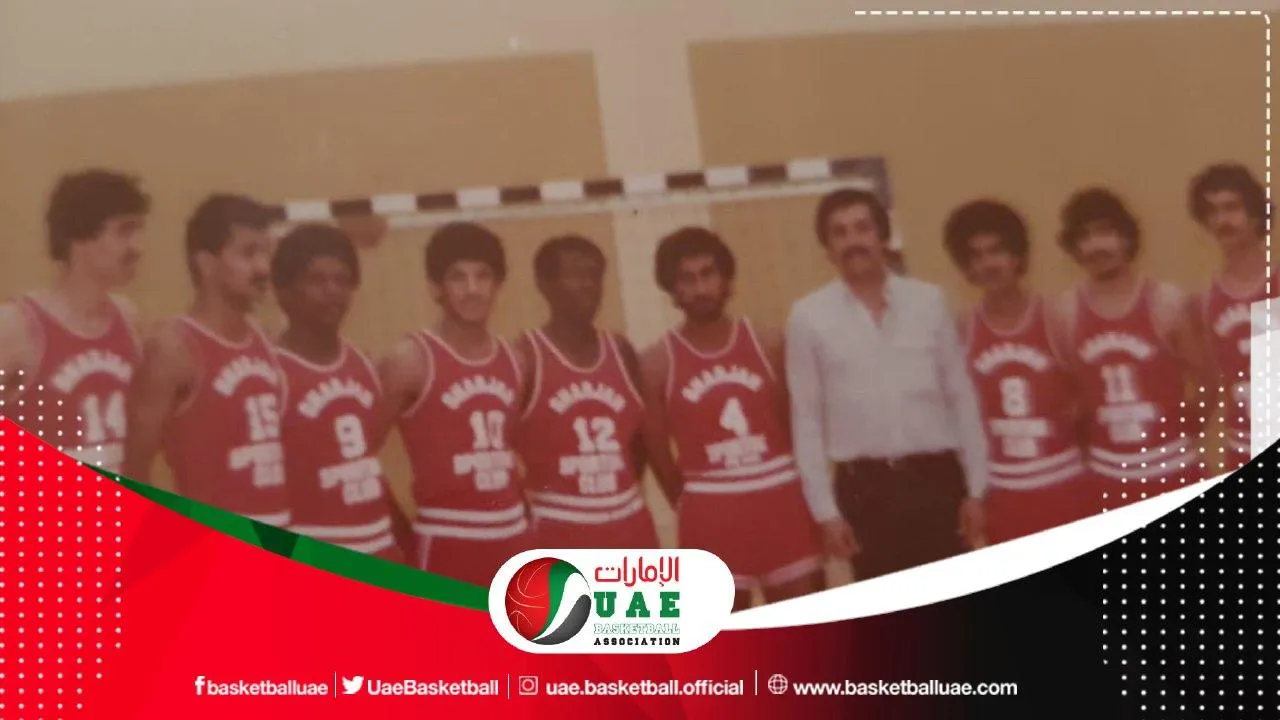
I started at Sharjah at 13, in the cadets age group, and won a number of titles with Sharjah under Captain Adnan Yassin, among them two league titles and three cups. I stopped playing in 1988.
Why did you turn to officiating rather than coaching?
In May 1984 there were two leadership courses in Dubai run by the Ministry of Youth and Sports at the time, one for coaches and one for referees, and I took part in both, along with Ahmed Jasim, Abdulrahman Al Shamsi and Mohammed Al Shehhi. In officiating at the time there were Captain Qassem Daadoush, Mohammed Mahmoud and Mohammed Al Khouli, and they encouraged me a great deal to go into it. At the club there was the Syrian coach Adnan Yassin, who always told me my inclinations were towards officiating, from the way I refereed whenever we split into sides.
Who were the players of your generation?
Abdulrahman Al Shamsi, the late Mohammed Fawzan, Ahmed Jasim, Mohammed Al Shammari and Alawi Ali.
Who in the family plays basketball?
My son Hamad currently plays for Sharjah, and Obaid, though he left the game of his own accord at juniors level. My sister's son Abdullah Yaqoub plays for Al Wahda's first team on loan from Sharjah, and Khalid, son of my brother Juma, reached youth level at Sharjah and now holds an administrative post there.
Do you see basketball being passed down through families?
I do see it with us. My son Hamad was inclined towards football, but I pushed him into basketball. That may have been a mistake, but it is what we did with our sons, even though a footballer earns far more than a basketball player. We did not pay attention to that at the time. In general, though, the number of families passing the game down in basketball is not large.
When will Sharjah win the league again?
In all honesty, it puzzles me. We expected the team to take the title several years ago, but I do not know the reason for the players' nerves at certain moments — even though the club has won Arab and Gulf titles, while at home it is absent.
Why are Emirati referees so scarce?
The financial return is the main obstacle and it is extremely low. This season the federation agreed to pay a new referee 1,500 dirhams, but unfortunately we have not found anyone coming forward.
Why did the young referee project fail?
The coaches were the reason, through their lack of cooperation with us. And a very important point in the young referee project was how they would travel to matches — that was the biggest difficulty we faced.
When did your association with the Dubai International begin?
With the very first edition in 1989. I have handled many finals over that long span, and I will never forget my beginnings at the tournament as a table official, before working my way up through its stages over all these years to remain part of it to this day.
Have you thought about retiring from officiating?
Yes — I have thought about it a great deal. But I have managed to keep my fitness and I find I still have the capacity and the competence to stay on court. When I find I am no longer able, I will retire at once, to protect the record I have built with basketball throughout my time on court. I received the international badge in 1993, and since then I have tried to maintain my standard and to deliver complete fairness on the floor.