Obaid Miftah on 35 titles and the state of the game
Now chairman of the sports games board at Al Wahda, the former star looks back on his career and assesses where basketball stands today.
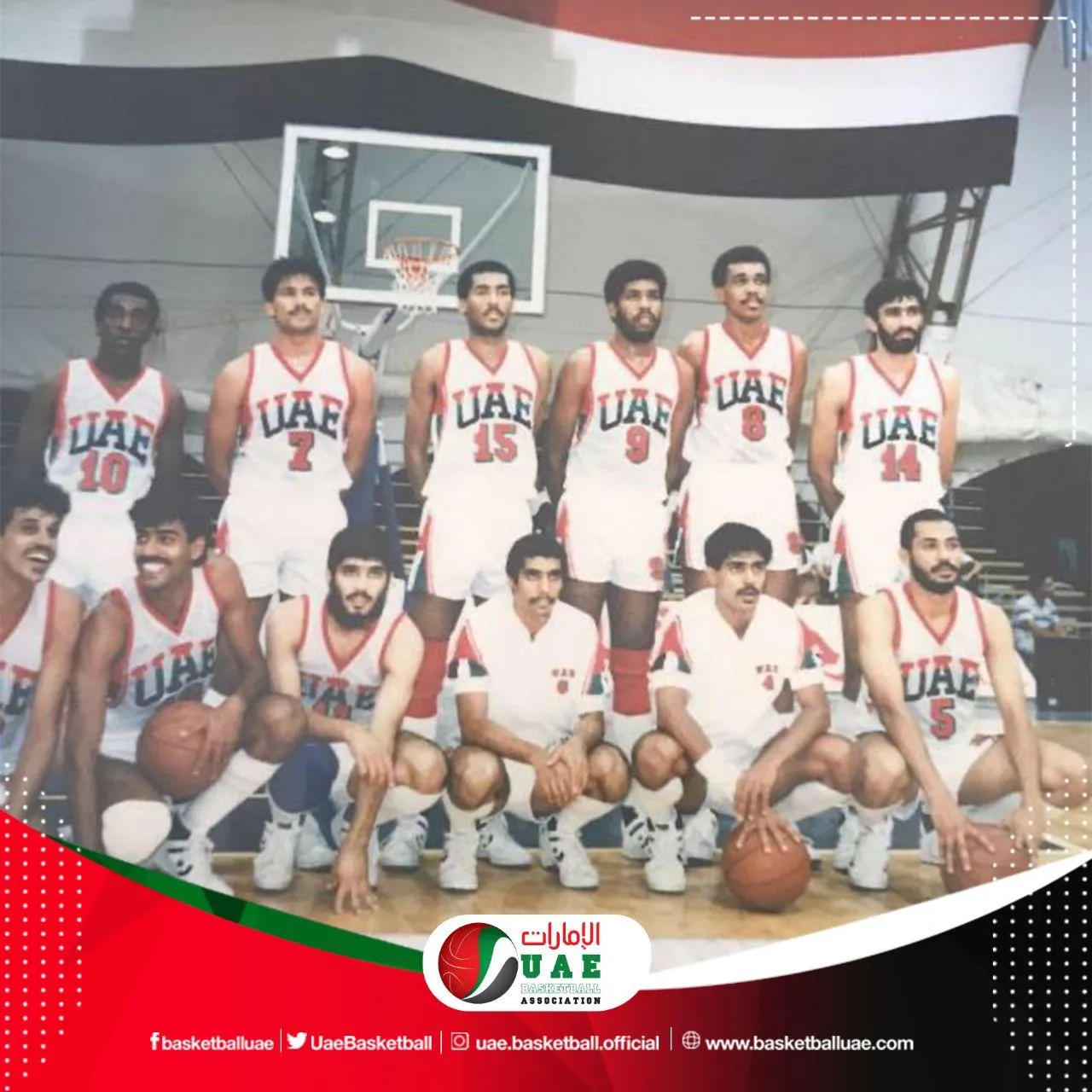
Obaid Miftah has been among basketball's leading figures for many years. He is currently chairman of the sports games board at Al Wahda, the club within whose walls he grew up and which he refused to leave as a player and now as an official. Across a long career he won more than 35 titles of various kinds, a record that confirms the talent of a generation that was, in many respects, the finest in Emirati basketball history.
The Basketball Association's website met Obaid Miftah for an open conversation in which he revealed much about the good old days and went back with us over unforgettable memories.
He began by thanking Major General Ismail Al Qarqawi, president of the Arab and UAE federations, for his efforts to develop the game at home and abroad.
Interview: Safaa Amer
How did it begin?
I started basketball in 1979/80 at Abu Dhabi club, when I was 18, before it merged with Emirates club. Early on I played handball and also football as a goalkeeper, but I did not feel I would realise my sporting ambition there. I moved to volleyball, then switched to basketball and found myself in it completely — the start of the real journey with a game in which I lived the finest and most exciting years, within the walls of Al Wahda and playing at every age group for the national teams.
Which titles did you win?
After Abu Dhabi and Emirates merged as Al Wahda, I won every title the club took while I was involved; my haul exceeds 35. We monopolised the league and cup for ten consecutive years, along with the shield of excellence, and no team could break our hold on the league title — though Shabab Al Ahli broke it in the cup.
When did you retire, and what came next?
I retired from playing in 2003 and my thinking turned to how to serve the club. I went into coaching and was assistant to the youth national team coach, taking part in four tournaments with different coaches including Captain Abdulhamid Ibrahim, Captain Amr Abu Al Khair and Captain Salem Ateeq. But the decision to suspend the game struck all of us like a thunderbolt. I spent my whole life at the club and never wanted to go to another. After leaving the game I kept playing it with friends alongside my private life, until the decision came to bring it back and I joined as a board member and supervisor of my two sports, handball and basketball, and now as chairman of the team games board.
What happened to the club that made the team disappear?
The decision to suspend the game in 2003 was the hardest sporting decision of my life, and it affected me deeply for many years until the game returned in 2013. The supporters never forgot basketball at Al Wahda — it was the reason for the club's fame locally, in the Gulf and across the Arab world, and I challenge anyone who says otherwise.
How do you see the game at the club now?
We are not rushing after titles, because I am certain they will come. What matters more to us is continuity and building properly from the base. We are being realistic through these years, and although the decision to enter the men's league was a step we had not counted on at this point, we found ourselves facing a decision that had to be carried out. I am optimistic that the current generation will carry the journey on, particularly with players who play out of love for the game, which matters enormously. There are players who do not want an end-of-season break, such is their appetite for it, and we won age-group titles in the past two years.
You played with one generation and now watch another — what is the difference?
I was fortunate to be part of a generation that, in my view, is the best ever to have played basketball in the Emirates. It was an irreplaceable generation that achieved a great deal and made its mark locally, in the Gulf and across the Arab world, with the national team and with Al Wahda, who were unquestionably the best in the game. We monopolised the titles for many years, alongside a full journey with the national teams, the military team, and the universities and police sides. The public followed the game closely — the stands were so full that in many matches we could not hear the coach's instructions over the noise, unlike what we see now. We played basketball for enjoyment, not for money as it is today.
Love of the game or money, in the sport of the past?
We played basketball out of love for the game and for sport itself, and that is what made us excel at the time. Basketball at Al Wahda was then at its peak, its golden era, with the club monopolising titles until the late 1990s. The proof is that despite the game being halted for years after the decision to cancel it, no club has yet matched Al Wahda's tally of 13 league titles. There was also continuity between generations and constant renewal, bringing young players up without any gap.
I remember we played the Arab Championship in Alexandria with the national team, and the five starters on court in the national team's name were all from Al Wahda, under the American coach Pat Stewart. The generation of that fine era did not think much about money, and made many sacrifices for the national team and the club. Unfortunately the newer generations are indulged and take more than they give, and a large proportion are less committed than our generation because of the many distractions that stop them focusing properly on sport. I do not want to be unfair to the current generation, because there is a good quality of player and we hope they will be the nucleus of strong national teams — and I am not speaking only about basketball, but about many team sports. Money matters, of course, but it was not our preoccupation. I remember a period when we won the league in several seasons and the Gulf championship without receiving any bonus, despite Al Wahda's achievement in 1994 as the first club to win the Gulf Clubs Championship, and without overseas players.
A match you will never forget?
One of Al Wahda's league titles required us to beat Sharjah in the final match by 19 points; if we did not reach that margin the title could go to Shabab Al Ahli, then Al Ahli. Sharjah at the time were one of the strong sides competing with Al Wahda and Al Ahli for trophies. It was an extraordinary match and we managed to win by exactly 19 points and do what was needed. I remember the Al Ahli players believed they had secured the title, and were stunned when we scored the last two points of the game.
How did you balance sport and study?
Sport did not stop me completing my university education, once I had balanced basketball and study; we believed in the importance of academic attainment despite the difficulties. We did not think about turning professional in those days, even though it was an opportunity, and I may have felt some regret afterwards — but at the same time I am content with what I achieved, particularly as I took a master's degree in Australia and played for Australian teams during that period.