Issa Hilal: the game is more enjoyable now, but Emirati referees and coaches must be built
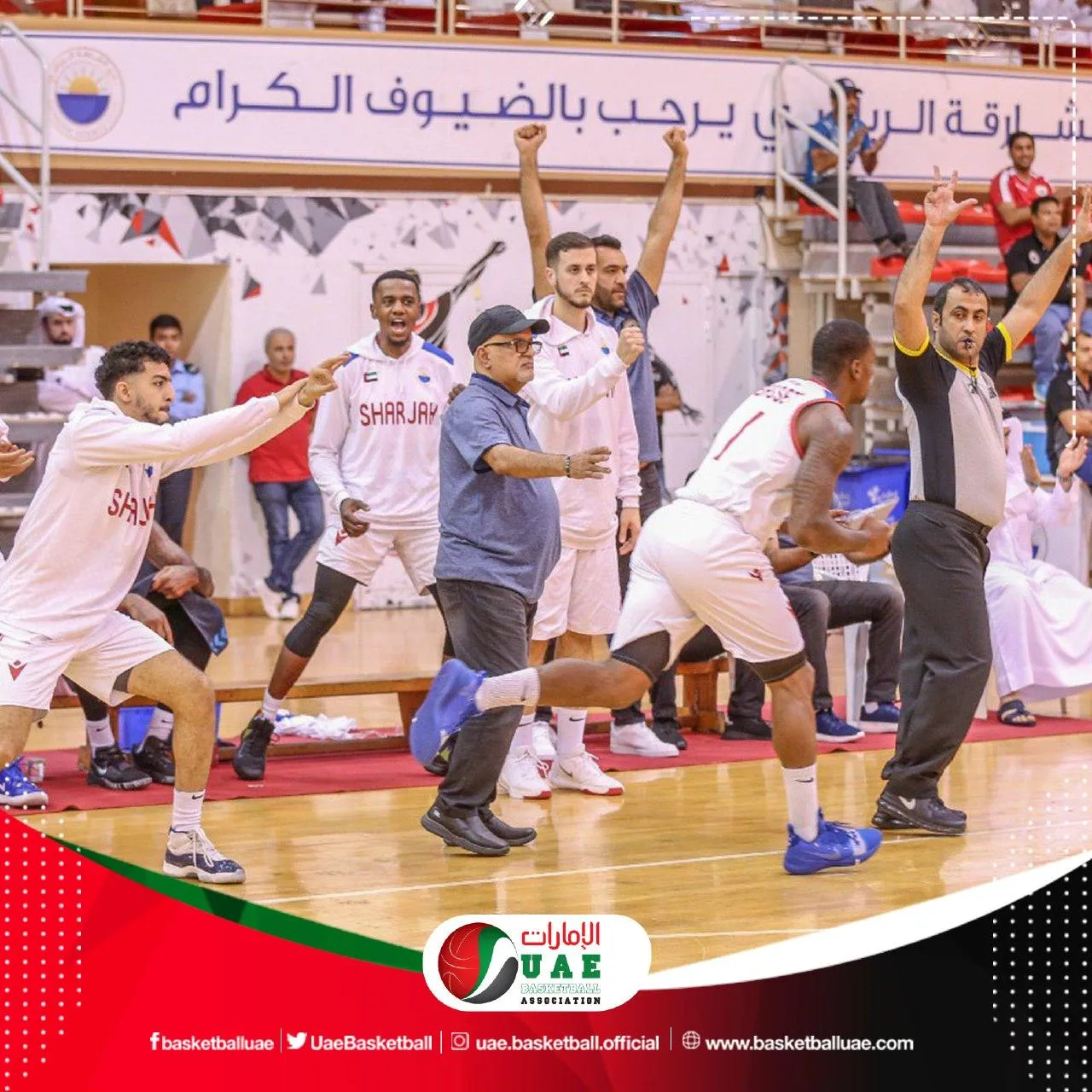
The secretary general of Sharjah Sports Council answers ten questions on the state of basketball in the country.
In a conversation in which we put ten questions to Issa Hilal, secretary general of Sharjah Sports Council, he answered with complete frankness on the subject of basketball — a game he belonged to in earlier years as a player for Sharjah and for our national teams.
Among his franker answers came his response when the Basketball Association asked about Sharjah's long absence from the league title: “You have wounded me mortally.” He offered reasoned explanations on other matters too.
Asked about the absence of Emirati referees and coaches from the game, he said: “They cannot be made out of thin air.” Ten questions, with realistic, reasoned and candid answers.
Interview: Safaa Amer
When did you start playing basketball, and at which club?
I started in the 1978/79 season with Sharjah, when I was nine.
Which titles did you win with the club and the national team?
I won two league titles and a cup with the club, and played for all the national teams — but my job as a police pilot stopped me continuing, as release and leave for the national team were extremely difficult. I took part with the mini-basketball team, the youth team twice and the seniors twice, but work made it impossible to stay with them long. I retired from playing at 31, in 2000.
Who were the players of your generation?
I was a contemporary of the game's golden generation, among them the late Mohammed Fawzan, Ahmed Jasim, Hakim, Abdulrahman Al Shamsi, Hassan Al Hammadi, Abdullatif Hassan, Yaqoub Ghabash and Hisham Salem — and from the newer generation Mohammed Abdulrahman, Munther and Nasser.
Your view of the basketball of the past?
There is no comparing then and now. Today there is skill, speed and performance, but the difference is the loyalty to clubs and the deep love of the game we had in the past. When we lost a match we felt real sorrow and waited for the next one to make amends — unlike what we see now, where it has become ordinary for the players. For us a match was life or death. It has to be acknowledged that a great deal has changed and it is difficult to compare two eras so far apart in so many respects; each period has its people, its circumstances and its support.
Your view of basketball now?
The present era is marked by enjoyment, high skill levels, talent and speed, with the presence of overseas players — which leads me to say that today is the better era for basketball.
Has the game benefited from professionalism?
The game began to develop when American coaches took charge of our clubs, followed by American players and then other nationalities. The American coaches, and the Europeans alongside them, genuinely produced an important shift in Emirati basketball, and the American school deserves the credit for our development — Dan Reed, Bob Murphy, Pat Stewart and Tom Quinn among them. Our biggest obstacle is the naturalisation of players, as happens in neighbouring countries such as Bahrain; naturalisation would solve a number of our problems. Support must also increase for every national team, from cadets and juniors to youth and the senior side.
He added: “We must give attention to long-term preparation, and the reason we do not is the absence of a fixed and sufficient budget. Tribute must be paid to the significant role played by Major General Ismail Al Qarqawi, president of the UAE and Arab federations, by vice-president Abdullatif Al Fardan, and by Dr Mounir Ben Habib, the federation's technical director.”
Why has Shabab Al Ahli dominated the league for so long?
The team has an outstanding group of players, among them Saeed Mubarak, his brother Mohammed Mubarak and Mohammed Abdullatif, as well as bringing in overseas players of a high level. Their strength was increased by the merger of Shabab with Al Ahli, which made the team stronger and more solid at the same time.
Why has Sharjah been absent from the league title all these years?
The very high standard maintained over long periods by Al Ahli and, formerly, Al Shabab in Dubai — nearly ten years with a group of talented and creative players, helped by the release of Emirati players from work — gave the Dubai players an advantage for a long time. That release has now ended. From watching and following Sharjah at present I see them coming strongly, given the good work both in the age groups and in the first team, and Sharjah should have taken the league title this season once the competition resumed.
Why are Emirati referees and coaches so few?
On officiating, anyone who takes it up has to be passionate about it and love it, because the financial return is extremely low. I would like to see retired players move into officiating to bring their experience as players to it, and add a new distinction to their sporting record after their glory as a player — but if they look at the money, they will never go into it. As for coaches, they cannot be made out of thin air; if a person has no technical inclination or aptitude it will not work, and the clubs must play a part in developing them.
As secretary general of Sharjah Sports Council, what have you given the game in the emirate?
The number of clubs playing the game in Sharjah has been increased to seven, where in the past there were only two. There is a project to spread team sports generally, and there are various halls. We hope that in future most national team players will come from Sharjah, given the work we are doing.