Dhaen Saif on Al Nasr basketball's golden age
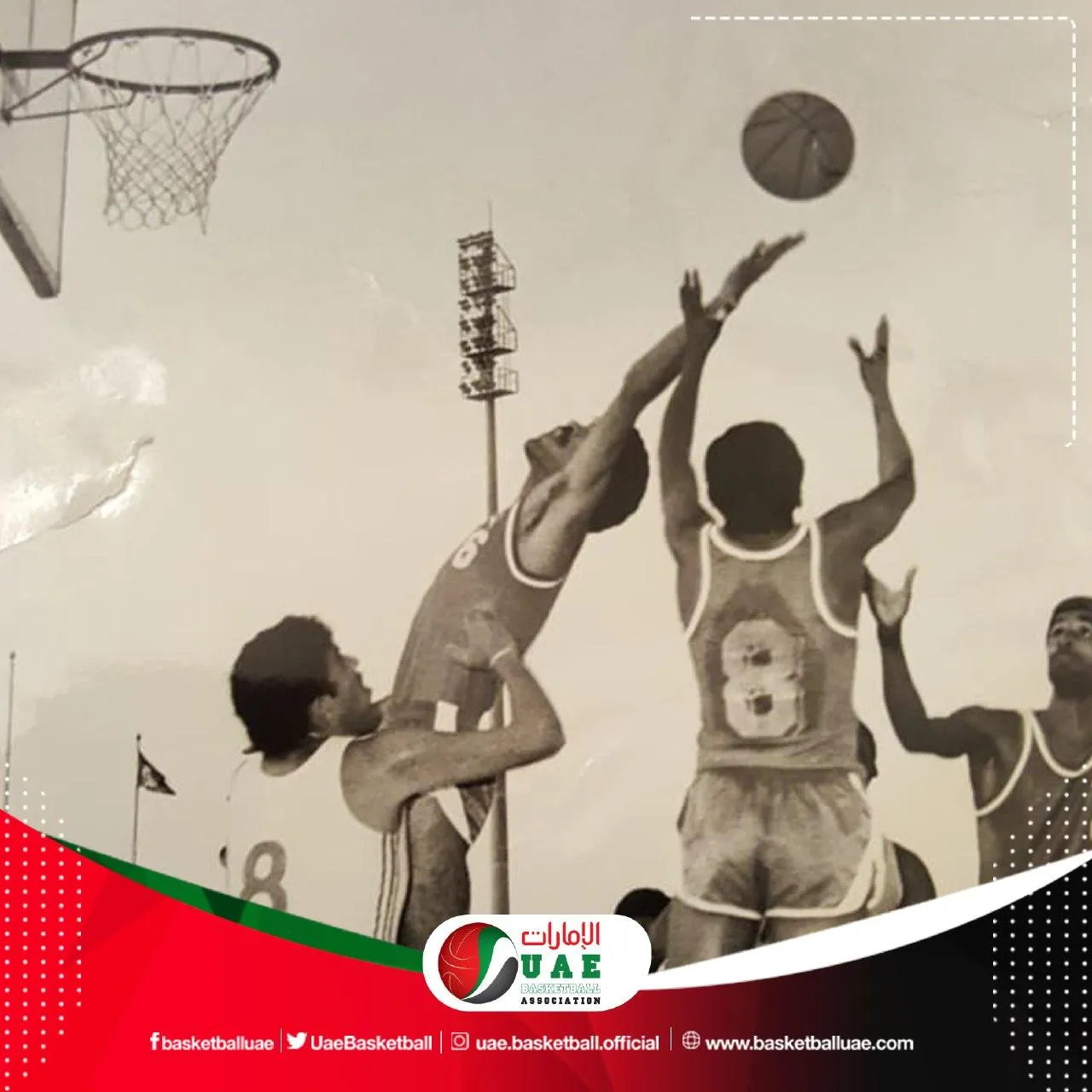
The former Al Nasr and national team player looks back on the club's early years and an unforgettable 1980s meeting with Sharjah.
Captain Dhaen Saif is a name bound up with basketball not only at Al Nasr but across the country. He is among the finest players the Al Nasr fortress gave the national team in the game's early years at the club and nationally, and one of those who enriched the sport from its beginnings — a distinguished player who went on to shine as a coach.
Dhaen Saif's presence was a crucial factor in establishing the game on Al Nasr's map. He loved it and lived with it for many years, and as time passed basketball at Al Nasr began to flourish — but it has never forgotten its first son, one of its old giants.
The Basketball Association's website spoke to Captain Dhaen Saif, who opened up in a frank conversation about the good old days and the game's earliest years in the Emirates.
Interview: Safaa Amer
He has not forgotten the great match between his Al Nasr side and Sharjah in the 1980s, recounting details that were both entertaining and gripping as though it were yesterday.
What is the story of that famous match against Sharjah?
It began when we had a game against Sharjah at our own court, after the first match had ended in a Sharjah win by around 30 points. The amusing part is that our club administrator at Al Nasr was certain we would lose the second as well. But I took it on as a challenge, and I could see defeat in my team-mates' eyes several days beforehand. I spoke to our Egyptian coach Ahmed Kamel at the time and asked that we train as hard as we possibly could to win. I would drive to the players' homes to collect them and encourage them to play the match and beat a Sharjah side that had two Senegalese internationals of 205cm and 213cm, while our team had a Sudanese player and a Somali. The day before the match there was heavy rain that flooded our open-air court, and the game was moved to Sharjah's hall.
The match swung back and forth, and shortly before the end Sharjah were a point ahead. We had an attack, and during the time-out the coach told me to pass to my Sudanese team-mate. But when we came back on court I told him to pass to me and I would score. I took the ball, scored two, and the match finished in our favour by a point — a thrilling win, and I collected on the “ghouzi dinner” bet I had made before the game.
Going back to the beginning — when did you start in the game?
My career began with the beginning of basketball in the country, when I was 14. I stayed with it, and within the walls of Al Nasr, for a long time; I left the game at around 35.
Where did you go after retiring?
Into coaching, both at Al Nasr and with the national team. I was among the first to coach our national team, which is a great honour for me.
How many titles did you win as a player?
I played at every age group at the club, being one of its founders. Across my career I would say I won five different titles. I played at juniors and then youth level, and while still at youth level I was with the first team and the national team as well.
Why did you turn to coaching?
My love of basketball, and the fact that I was trained by a large number of coaches from different schools. I wanted to pass on what I had gained from them to the club's players and to the national team. I spent a good while in coaching and I believe I contributed something that helped move the game forward. I loved coaching far more than officiating, and I took coaching courses in Italy and the United States.
Why did you leave basketball so many years ago?
My work took me a long way from the game — I was serving in the military in Abu Dhabi and Al Ain — and there was also the injury that pulled me away at around 35. I was still on the court, but the injury played a decisive part in my leaving directly. I was working from early morning until late afternoon, and sport requires commitment; I felt at the time that commitment to my job mattered more, especially after the injury.
Who were the players of your generation?
I am from the game's first wave. There was a large group, among them the late Fawzan, Ahmed Jasim, Obaid Sultan, the late Al Jumairi and others. Together we produced fine matches and standards at club and national team level.
How do you see the game then and now?
We loved the game and gave it all our time. The proof is that we used to spend long stretches on court, unlike now — a player's career is short compared with our generation. We were not chasing money so much as enjoying the game, and there was a real contest between the Emirati player and the overseas one. I would score between 30 and 35 points, and the challenge between me and the overseas player was considerable. Perhaps that intensity among players has disappeared today.
Why have basketball crowds drifted away?
There are several things that draw a crowd. Match times have to suit the public, and there has to be proper promotion of matches, especially the popular ones. That is a shared responsibility between the federation and the club.
Why have tall players disappeared?
It depends on how coaches select. Those players have to be sought out, and scouting matters enormously in this game. Tall players have disappeared.
Why has the number of local coaches and referees fallen?
The federation has to encourage Emirati coaches and referees through meaningful initiatives. But more important still is that the Emirati coach or referee genuinely wants it. If they do not love the game, no solution the federation offers will work.
How do you see the role of schools in producing talent?
Children in schools must be encouraged and taught, but those currently in schools do not have the high coaching qualifications needed to guide a player. Those elements are entirely absent from schools, where sport is merely an activity rather than a reservoir for producing talent. Schools are of course a sporting treasure in every game, not only basketball — but there must be coaches qualified for the work, not just a recreational period.